
Online exams have transformed how schools, universities, certification bodies, and recruiters conduct assessments. But as examinations move online, online exam cybersecurity has become just as important as the exam itself.
In 2026, exam platforms handle sensitive information including candidate identities, question banks, examination results, recordings, and sometimes biometric or video data. A security weakness can therefore affect more than a single test—it can compromise data privacy, exam integrity, institutional reputation, and candidate trust.
Recent cyber incidents affecting education technology platforms have also demonstrated how disruptions can occur during critical examination periods. In May 2026, a cyberattack affecting Canvas disrupted access for educational institutions during final-exam season, forcing some schools to postpone examinations.
So, what are the biggest cybersecurity risks facing online examinations in 2026?
1. Data Breaches and Candidate Information Theft
Online examination platforms can store large amounts of sensitive information.
This may include:
Candidate names and contact details
Student or employee IDs
Examination results
Login credentials
Uploaded identification documents
Proctoring recordings
Images and video
Question banks and assessment content
A successful data breach can expose this information to unauthorized individuals. Organizations should therefore apply encryption, access controls, secure storage, monitoring, and strong data-retention policies.
2. Credential Theft and Account Takeovers
Weak passwords and stolen credentials remain major cybersecurity concerns.
Attackers may use phishing emails, fake login pages, credential stuffing, or social engineering to obtain administrator or candidate accounts. Once an administrative account is compromised, attackers could potentially access question banks, modify assessments, or manipulate examination data.
Modern authentication practices are increasingly important. NIST's current digital identity guidance emphasizes authentication and authenticator management as key components of secure digital access.
Multi-factor authentication (MFA), strong password policies, role-based access, and suspicious-login monitoring can significantly strengthen account security.
3. Question Paper and Question Bank Leakage
The security of examination content is just as important as candidate data.
If unauthorized users gain access to a question bank before an exam, questions could be leaked through screenshots, downloads, compromised administrator accounts, or insecure integrations.
A secure online examination system should use:
Role-based question-bank permissions
Encrypted question storage
Restricted downloads
Audit logs
Secure administrator authentication
Controlled question delivery
The goal is simple: the right question should reach the right candidate at the right time.
4. Ransomware and Exam Disruption
Ransomware is another significant risk for education and assessment technology.
An attacker may attempt to encrypt or destroy critical systems, making examination platforms unavailable. NIST's 2026 ransomware guidance highlights the importance of identity management, authentication, access control, detection, response, and recovery.
For examination providers, resilience is critical. Security should therefore include regular backups, incident-response plans, system monitoring, disaster recovery, and tested business-continuity procedures.
5. Phishing and Social Engineering
Cybersecurity is not only a technology problem.
Candidates, administrators, teachers, HR teams, and exam coordinators can all become targets of phishing attacks. An attacker may impersonate an examination authority and request a password, verification code, or login.
Organizations should provide regular cybersecurity awareness training and make official communication channels easy to verify.
6. Proctoring and Privacy Risks
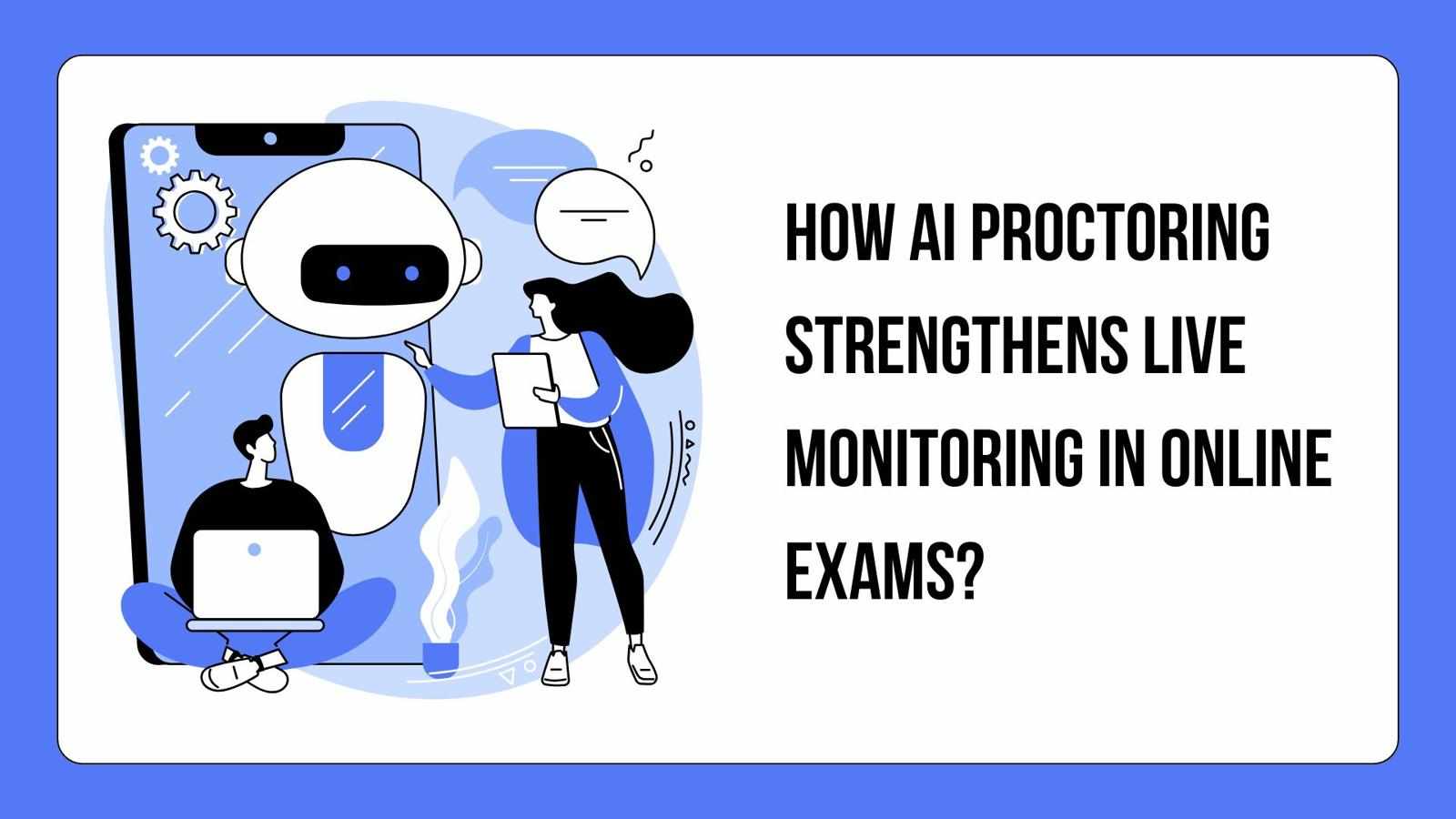
AI and remote proctoring can improve examination integrity, but they also introduce privacy considerations.
Depending on the system, online proctoring may process video, audio, screen activity, identity information, or behavioral signals. Research has documented concerns around the amount and sensitivity of information collected by online proctoring services.
Therefore, secure proctoring should follow a privacy-by-design approach.
Organizations should clearly understand:
What candidate data is collected
Why it is collected
Where it is stored
Who can access it
How long it is retained
How it is securely deleted
7. Malware and Unsafe Devices
Candidates may take examinations using personal computers, laptops, or mobile devices that are infected or poorly secured.
Malware could potentially interfere with examination sessions, capture credentials, or compromise sensitive information.
Security measures such as secure browsers, device checks, controlled application access, session monitoring, and endpoint security can reduce the attack surface.
8. Third-Party and Supply-Chain Vulnerabilities
An examination platform may depend on cloud providers, authentication services, analytics tools, payment systems, video infrastructure, or other external technologies.
A vulnerability in one connected service can potentially affect the wider examination ecosystem.
Organizations should therefore evaluate vendors carefully and review their security controls, access permissions, data-processing practices, incident-response capabilities, and compliance requirements.
How Can Organizations Secure Online Exams in 2026?
A strong online exam cybersecurity strategy should combine technology, people, and processes.
Essential security measures include:
Use strong authentication: Protect administrator and high-privilege accounts with MFA and appropriate access controls.
Encrypt sensitive information: Protect candidate data, examination content, and communications both during transmission and storage.
Apply least-privilege access: Users should only have access to the information and functionality required for their role.
Monitor suspicious activity: Logging and security monitoring can help identify unusual account activity or attempted attacks.
Protect question banks: Restrict access to sensitive examination content and maintain detailed audit trails.
Secure proctoring data: Collect only necessary information and establish transparent retention and deletion policies.
Prepare for incidents: Have tested backup, recovery, and incident response procedures in place before an attack occurs.
Follow recognized frameworks: Cybersecurity frameworks can provide a structured approach to managing security and privacy risks. NIST's cybersecurity and privacy resources cover areas including identity management, risk management, cryptography, privacy engineering, and trustworthy platforms.
Why Cybersecurity Is Now Part of Exam Integrity
Exam integrity is no longer simply about preventing a candidate from copying an answer.
A truly secure examination must protect the entire assessment lifecycle—from question creation and candidate registration to authentication, examination delivery, proctoring, scoring, reporting, and result storage.
FAQs
What is online exam cybersecurity?
Online exam cybersecurity refers to the technologies, policies, and processes used to protect digital examinations from hacking, data theft, unauthorized access, malware, disruption, and other cyber threats.
What is the biggest cybersecurity risk for online exams?
There is no single universal risk. Credential compromise, data breaches, ransomware, question-bank leakage, phishing, and third-party vulnerabilities can all create serious threats.
Why is MFA important for online examination systems?
MFA adds an additional authentication layer, making it harder for attackers to access accounts using only stolen passwords.
Is AI proctoring secure?
AI proctoring can strengthen exam monitoring, but its security depends on how candidate information is collected, processed, stored, accessed, and deleted.
How can online exam platforms prevent question-paper leaks?
Organizations can use encrypted question banks, role-based permissions, secure authentication, audit logs, restricted downloads, and controlled question delivery.
Closing: Secure Exams Build Trust
In 2026, online examination security is no longer optional. As assessments become increasingly digital, cybercriminals have more opportunities to target candidate accounts, question banks, examination platforms, and sensitive assessment data.
The strongest approach is proactive: secure authentication, encrypted data, controlled access, protected question banks, privacy-conscious proctoring, continuous monitoring, backups, and incident-response planning.
For institutions and organizations adopting online assessments, cybersecurity should be built into the examination process from day one—not added after an incident.
A secure online exam doesn't simply protect technology. It protects the credibility of the assessment itself.












Write a comment ...