
Introduction,
As digital transformation accelerates, educational institutions, recruitment bodies, and certification providers increasingly rely on online examination sites. With this shift comes a need for robust, reliable, and intelligent proctoring systems that effectively ensure exam authenticity and prevent misconduct.
In this article, we explore what Proctor Monitor means, how it works, and why it has become a critical pillar of secure online assessment.
What is Proctor Monitoring in Online Exams
A proctor monitor—often referred to as an online proctoring system - is a combination of AI-driven surveillance, human invigilation, and smart monitoring tools that ensure examinees follow exam rules in a remote environment.
Webcam video
Microphone audio
Screen recording
Browser activity tracking
Identity authentication systems
This monitoring framework matches or exceeds a traditional invigilator, ensuring remote exams are secure and credible.
Why Proctor Monitoring Is Essential in Modern Online Exams?
The shift toward remote assessments introduces new challenges: impersonation, cheating, unauthorized device usage, and content theft. A proctor monitoring system combats these issues through:
Real-time surveillance, flagging suspicious actions instantly
AI anomaly detection, identifying unpermitted behaviors
Complete audit logs, helpful for post-exam evaluation
Tamper-proof environments, including browser lockdowns
Fairness and integrity, ensuring all candidates are judged impartially
Proctor monitoring has become essential for universities, competitive examination boards, corporate training departments, and certification bodies.
Types of Proctor Monitoring Systems
1. AI-Based Automated Proctoring
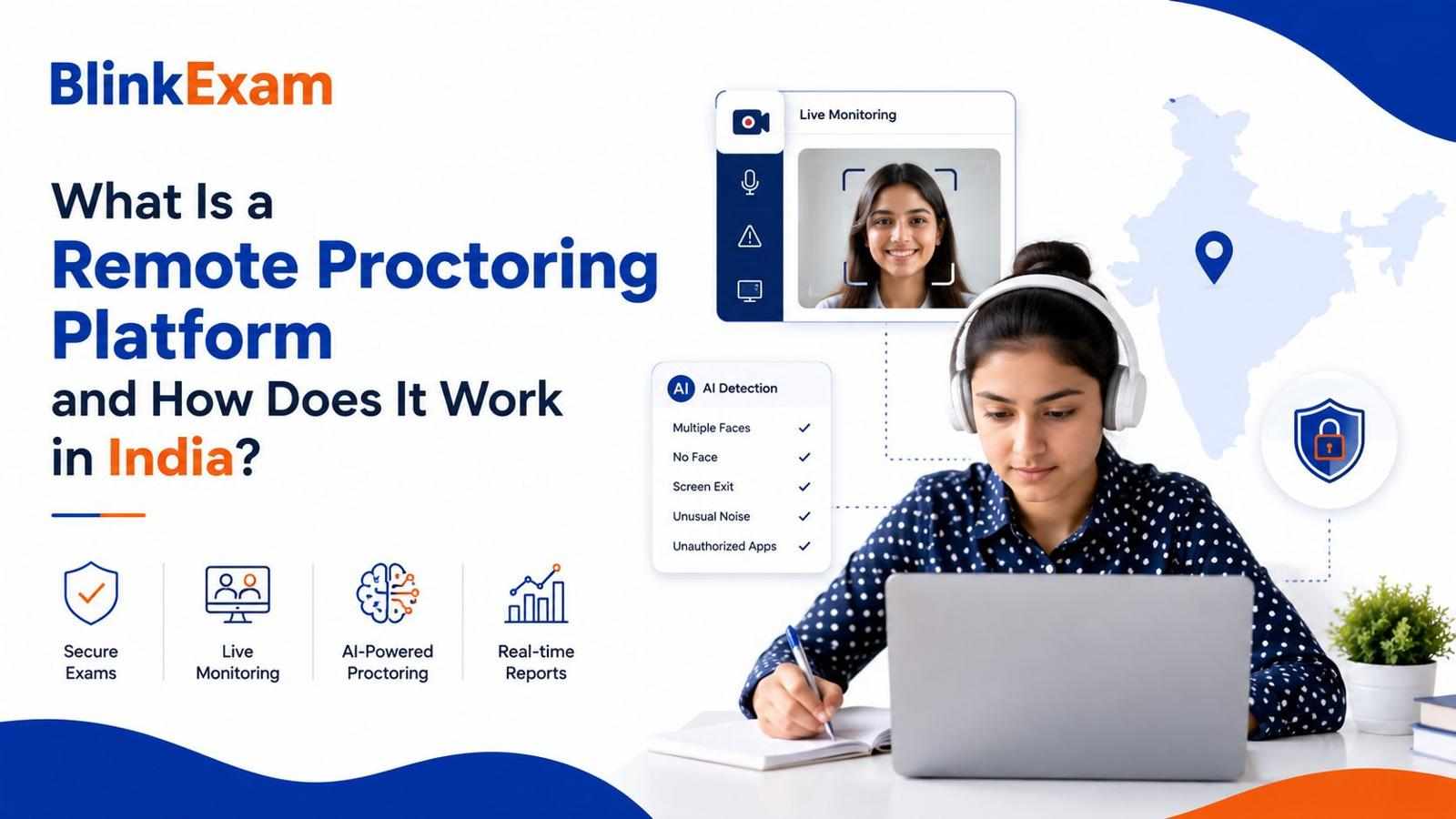
In automated proctoring, advanced AI algorithms monitor the student throughout the exam. The system can detect:
Multiple faces
Background movements
Mobile usage
Screen switching
Suspicious audio cues
Eye-gaze deviation
Automated proctoring is highly scalable and ideal for large exams, as it requires minimal human involvement.
2. Live Proctoring
Here, a trained human invigilator monitors the candidate in real-time through webcam feeds. Live proctors can:
Intervene during suspicious behavior
Pause or terminate the exam if needed
Communicate with candidates
Validate compliance
This method mirrors physical invigilation closely while leveraging digital tools.
3. Recorded Proctoring (Review Later)
In this model, the candidate’s video, audio, and screen activities are recorded and reviewed later by proctors. It is ideal for institutions that:
Need detailed audit trails
Want to assess high-stakes exams carefully
Prefer post-exam analysis instead of live monitoring
Key Features of an Advanced Proctor Monitoring System
A modern proctor monitoring platform integrates multiple layers of security. Below are the essential features that define a high-quality solution.
1. Identity Verification
Ensuring the right person takes the exam is crucial. Proctor systems utilize:
Face recognition
Government ID verification
Photo matching using AI
Biometric authentication
This eliminates impersonation risks.
2. 360° AI Surveillance
Top-tier systems include multi-angle webcam monitoring that detects:
Head movements
Unidentified objects
Additional persons in the frame
Attempts to hide from the camera
Some systems even support dual-camera streaming from mobile devices for enhanced visibility.
3. Browser Lockdown Technology
A secure browser environment prevents cheating by restricting:
New tab openings
Copy-paste attempts
Screen sharing
Keyboard shortcuts
External app usage
Candidates are fully confined to the exam interface.
4. Environment & Behavior Analysis
AI detects anomalies like:
Frequent look-away
Whispering or unidentified audio
Light changes
Attempted screen hiding
External device usage
Each suspicious event is flagged with severity ratings for human review.
5. Screen and Audio Recording
These provide tamper-proof evidence of candidate activity throughout the exam. Every action is logged to ensure transparency.
6. Real-Time Intervention
In live proctoring setups, invigilators can:
Send warnings
Chat with the candidate
Pause the exam
End the exam for serious violations
This maintains exam discipline dynamically.
Benefits of Using Proctor Monitoring in Online Exams
1. High Integrity and Security
With multiple layers of surveillance, exams remain compliant and trustworthy.
2. Cost-Efficient and Scalable
Institutions can conduct exams for thousands of candidates simultaneously, reducing costs associated with physical centers.
3. Accessibility and Flexibility
Students can take exams from anywhere, reducing logistical barriers.
4. Enhanced Trust for Employers & Institutions
Organizations gain confidence in the legitimacy of the results.
5. Comprehensive Audit Trails
Every event is documented, providing transparency and accountability.
Common Concerns and Myths About Proctor Monitoring
1. “The system invades privacy.”
Proctoring tools are designed with strict data security standards—encrypted storage, GDPR compliance, and limited access ensure privacy protection.
2. “AI may wrongly flag genuine behaviors.”
AI flags events, but qualified human reviewers verify and finalize decisions.
3. “Technical issues may interrupt exams.”
Modern systems include:
Auto reconnect
Low-bandwidth optimization
Backup recording
Multi-device support
These features reduce the risk of disruptions.
Who Uses Proctor Monitoring?
1. Universities and Colleges
Conducting semester exams, admissions tests, and distance learning assessments.
2. Competitive Exam Boards
Ensuring high-stakes exams remain credible.
3. Corporations
Evaluating employee training, certifications, and internal assessments.
4. EdTech Companies
Delivering scalable learning and testing services globally.
Future of Proctor Monitoring in Online Exams
The future promises even more sophisticated features:
Emotion analysis to detect stress patterns
Advanced fraud detection using machine learning
Greater automation to reduce human involvement
Voice biometrics
Multi-device synchronization for 360° supervision
As remote learning and testing continue to dominate, proctor monitoring will evolve to become even more secure, seamless, and intelligent.
Final Thoughts
A Proctor Monitor is far more than a webcam-based invigilation tool. It is a comprehensive, multi-layered surveillance and security ecosystem that safeguards the integrity of online exams. As education and recruitment move toward digital-first models, advanced proctoring solutions will remain essential for building trust, eliminating malpractice, and ensuring a level playing field for all examinees.








Write a comment ...